
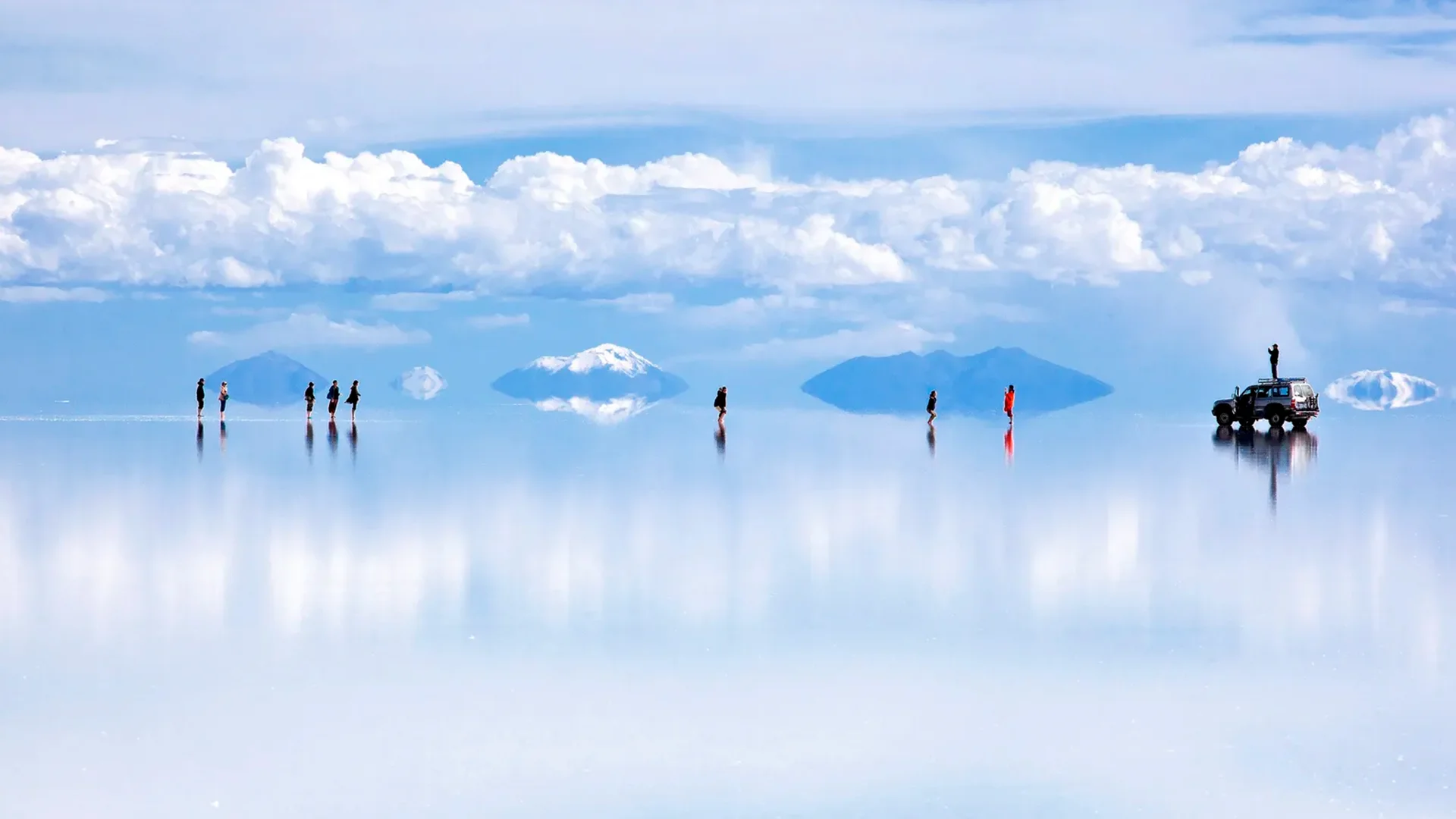
Bolivia is a country of contrasts, with landscapes ranging from vast salt flats to lush tropical rainforests full of biodiversity. Choosing the best time to visit depends largely on what you want to experience. In this blog, we help you find the perfect moment for your trip.
Uyuni Salt Flats: The Paradise of the Mirror Effect
If your dream is to capture the famous postcard image of the Uyuni Salt Flats with its mirror effect, the best time to visit is between January and February. During these months, a thin layer of water covers the salt surface, turning it into a perfect reflection of the sky. However, December can also offer great views, though with less guarantee of the ideal water levels.
If you prefer to avoid crowds, March and April are good options, although the weather is more unpredictable and rain can be heavier. For those who want to see the salt flats in their dry and crystalline version, the best months are May to November, when the surface takes on its bright white color and the geometric patterns of the salt are more visible.
Not sure when to travel? Contact us at Anavin Travel, and we’ll help you plan your adventure.
Exploring Bolivia’s Cities
If you’re more interested in exploring Bolivia’s vibrant cities like La Paz, Sucre, Potosí, or Santa Cruz, the best time to visit is during the dry season, from April to November. During these months, rainfall is minimal, making it easier to enjoy city tours, cultural fairs, and historical events.
La Paz, for example, offers clear skies and cool temperatures in winter (June and July), ideal for visiting its viewpoints, markets, and cable car system without worrying about rain. Sucre and Potosí are also best enjoyed in the dry season, especially thanks to their colonial architecture and walkable city centers.
On the other hand, Santa Cruz and Bolivia’s eastern lowlands have a tropical climate with warm temperatures year-round. Still, the best time to visit is between May and September, when rainfall decreases and roads to natural parks and reserves are more accessible.
Rainy Season: A Different Kind of Experience
Bolivia’s rainy season runs from November to April. While some roads can become more difficult to navigate, it’s also the time when nature is at its most spectacular. The Amazon rainforest comes alive, lagoons appear more vivid, and landscapes take on a lush green hue.
For adventure and photography lovers, traveling during this season offers unique imagery, although it’s important to plan routes carefully and choose the right destinations.
If you need guidance to choose the best time based on your travel style, Anavin Travel is here to help. Contact us, and let’s start planning your next adventure in Bolivia.